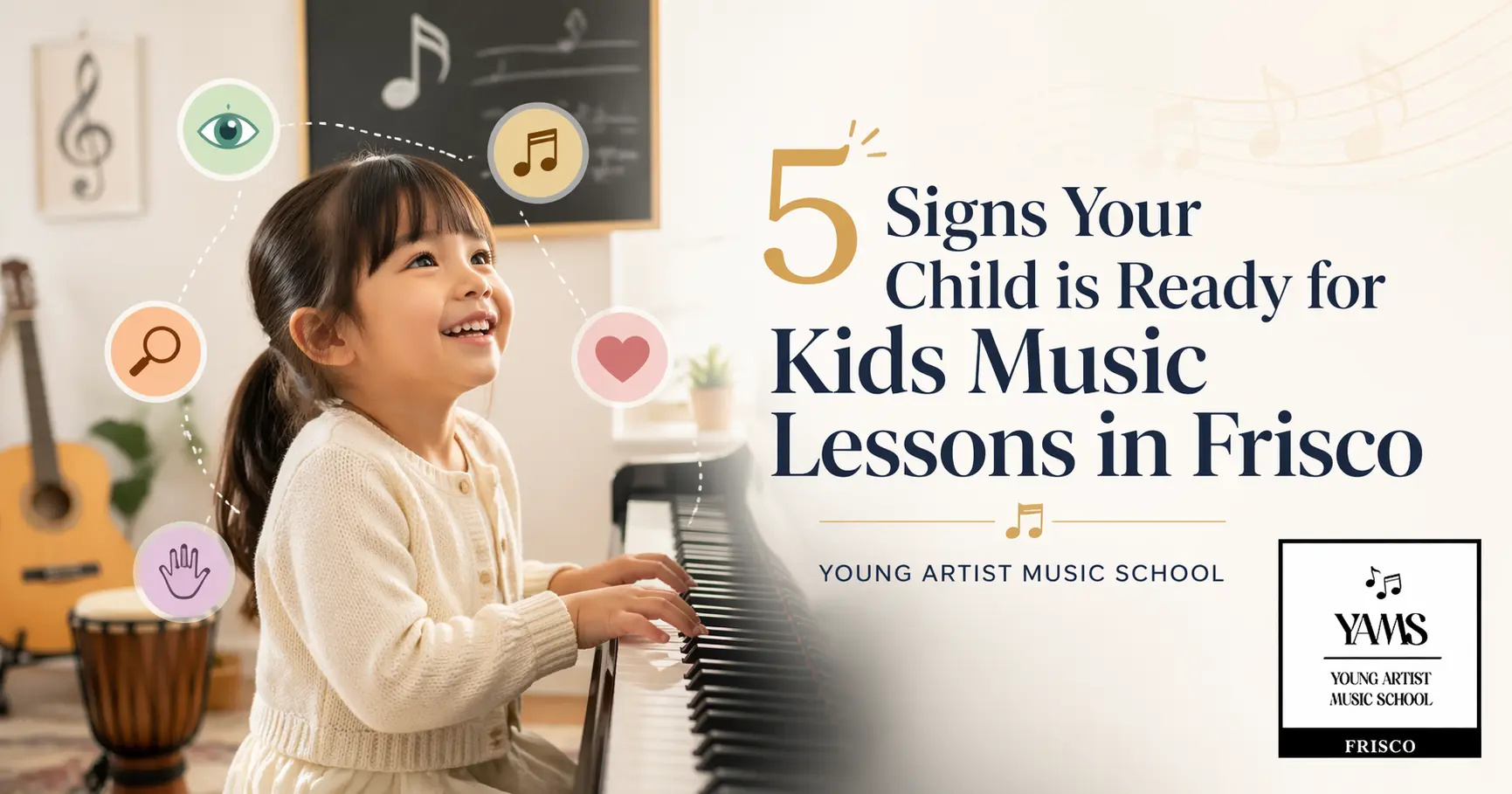
As a parent, watching your child show an early interest in music is an exciting experience. You might see them dancing to the radio in the car or happily tapping on pots and pans in the kitchen. But how do you know if it is just playful energy or a genuine sign that they are ready for structured instruction? At Young Artist Music School, we know that timing is a crucial factor when starting kids music lessons in Frisco. Starting too early can sometimes lead to frustration, but catching that ideal developmental window sets the stage for a lifelong love of music. Here is our expert checklist to help you decide if your little one is ready to begin their musical journey.
1. A Growing Attention Span and Focus
One of the most reliable indicators of readiness is a child’s ability to focus on a single task. If your preschooler or early elementary student can sit and engage with an activity—such as coloring, building blocks, or listening to a story—for about 10 to 15 minutes, they have the attention span required for early music education. Our instructors specialize in keeping young minds engaged, but this baseline level of focus ensures that the learning process remains fun and productive.
2. Natural Rhythmic Awareness
Look at how your child reacts to the music playing around them. Do they instinctively bop their head to a beat, march in time, or try to clap along with their favorite song? This physical, spontaneous response to sound is a fantastic indicator that they are developmentally prepared for kids music lessons in Frisco. It shows that their brain is already beginning to process and organize musical patterns, which is the very first step toward playing an instrument.
3. Active Curiosity About Instruments
Intrinsic motivation is the best fuel for learning. Pay attention to whether your child exhibits an active curiosity about how music is made. Do they immediately gravitate toward the piano when visiting a friend’s house? Do they ask questions about the instruments they see musicians playing on television? If they are naturally drawn to the source of the sound, they are likely ready to learn how to create those sounds themselves.
4. Developing Fine Motor Skills
Playing an instrument is a physical activity that requires a certain level of coordination. If your child is becoming more adept at using scissors, holding a pencil correctly, or tying their shoes, their fine motor skills are maturing. This physical development is essential for tasks like holding a small violin bow correctly or pressing individual piano keys with distinct fingers.
5. Emotional Readiness for Trial and Error
Finally, consider their emotional resilience. Learning any new skill involves a learning curve. If your child can handle minor, everyday frustrations—like a puzzle piece not fitting right away—and is willing to try again with a little encouragement, they possess the emotional readiness needed for music. They certainly do not need to be perfect; they simply need a willingness to explore. If you are seeing these positive signs, it is the perfect time to explore our premier kids music lessons in Frisco and find a joyful, supportive program for your family.